Why an MRI Doesn't Always Tell You the Real Reason You're in Pain
Why an MRI Doesn't Always Tell You the Real Reason You're in Pain
Education |30 July 2026| Dr. Dann
"I had an MRI, and it showed a disc bulge."
"My X-ray says I have arthritis."
"The doctor told me my meniscus is torn."
These are some of the most common things we hear during Discovery Visits at I.MOVE. Health and Performance.
While imaging can be incredibly valuable in the right situations, one of the biggest misconceptions in healthcare is believing that a diagnosis automatically explains the cause of your pain.
Often, it doesn't.
Imaging Shows Anatomy. It Doesn't Show Movement.
An MRI can tell us that a tendon is irritated.
An X-ray can show arthritis.
A scan can reveal a disc bulge.
What those images can't tell us is why those tissues became overloaded in the first place.
Pain develops because of stress placed on the body over time. If that stress continues, symptoms often return—even if the scan gave the problem a name.
That's why two people can have identical MRI findings but completely different experiences.
One person has no pain.
The other struggles to walk around the block.
The picture didn't change.
The way their body moves did.
A Diagnosis Is the Starting Point—Not the Finish Line
Imagine taking your car to a mechanic because the front tires keep wearing out.
The mechanic tells you, "Your tires are worn."
They're right.
But that doesn't answer the real question.
Why are they wearing out?
The alignment?
The suspension?
Tire pressure?
Driving habits?
Replacing the tires without fixing the underlying problem means you'll eventually be back with the same issue.
The human body works the same way.
A diagnosis labels the tissue that's irritated.
It doesn't always explain why that tissue became irritated.
This Is Why Rest Often Stops Working
Many people come to us after trying rest, stretching, massage, injections, or even physical therapy.
Sometimes those treatments help temporarily.
Then they return to running, lifting, hiking, pickleball, or simply working in the yard...
...and the pain comes right back.
That's usually because the irritated tissue calmed down, but the movement pattern that overloaded it never changed.
At I.MOVE., we're interested in answering a different question:
Why does this pain keep coming back?
Why We Spend So Much Time Watching You Move
One of the biggest differences at I.MOVE. is that we don't immediately jump into treatment.
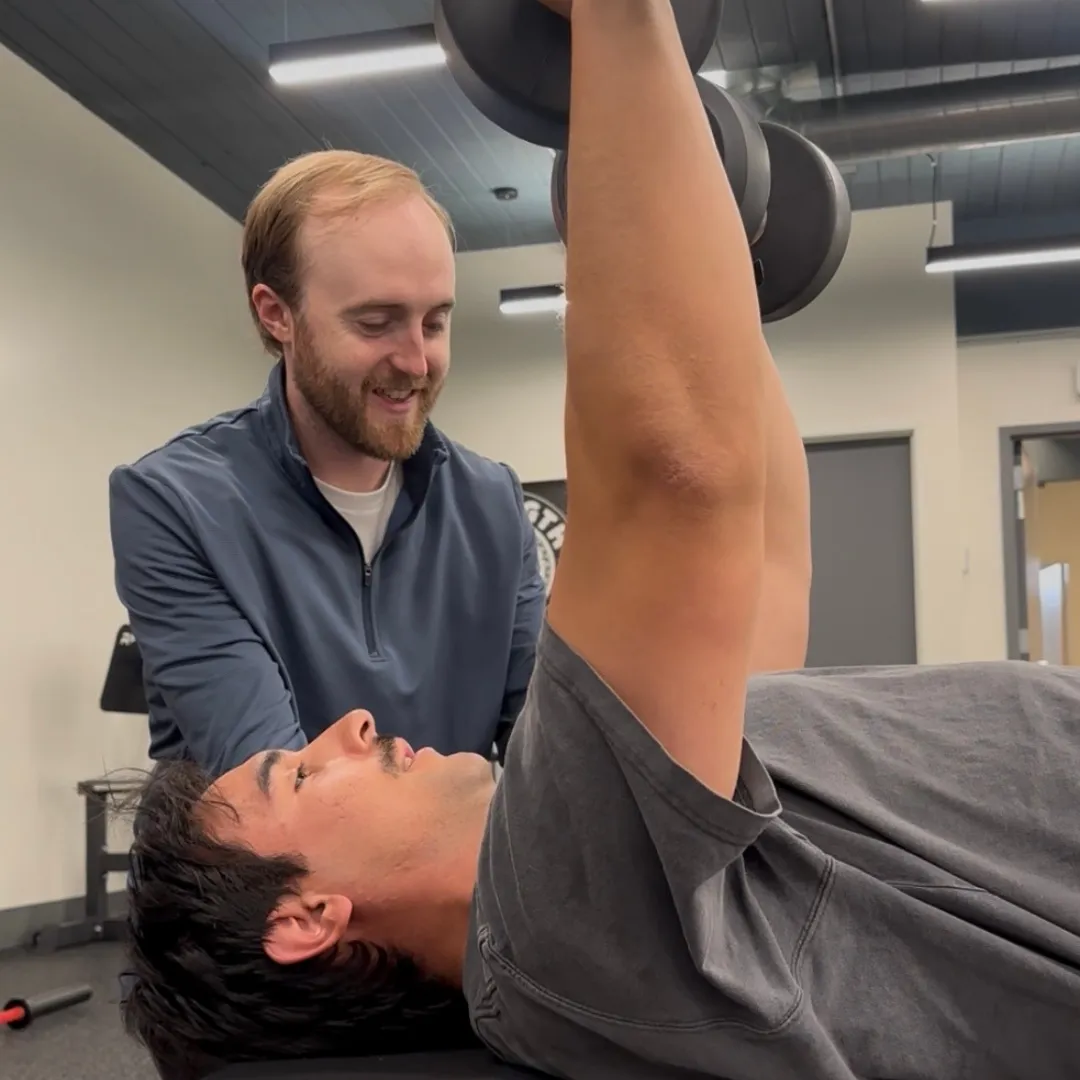
We first perform a Comprehensive Movement Assessment.
We watch how you squat.
How you walk.
How you balance.
How you rotate.
How different joints work together.
Why?
Because pain is often the result of several small movement limitations adding up over time.
Your knee may hurt because your hip isn't contributing enough.
Your shoulder may hurt because your upper back doesn't rotate well.
Your low back may be working overtime because your hips have become stiff.
Treating only the painful area may reduce symptoms for a while, but unless the movement problem changes, your body often finds its way back to the same place.
When Imaging Is Essential
This doesn't mean imaging is bad.
Far from it.
There are times when X-rays, MRIs, or other imaging are critical.
Significant trauma, suspected fractures, infections, certain neurological symptoms, unexplained weight loss, or other medical red flags all deserve further investigation.
Imaging helps rule out serious conditions and can guide medical decisions when appropriate.
The key is understanding that imaging is one piece of the puzzle—not the entire picture.
Our Goal Isn't Just Pain Relief
Anyone can chase symptoms.
Our goal is to help you understand your body.
When you understand why your pain developed, you can move differently, train with confidence, and reduce the likelihood of the same injury returning.
That's why every visit at I.MOVE. combines hands-on care, movement assessment, manual therapy, and education-based rehabilitation.
Not because we're trying to make treatment more complicated.
Because lasting results usually require more than simply knowing what showed up on an MRI.
Stop Chasing the Diagnosis. Start Solving the Problem.
If you've been told you have arthritis, a disc bulge, tendinitis, or a torn meniscus—but you're still wondering why you're in pain—you aren't alone.
A diagnosis can provide valuable information.
It just doesn't always provide the entire answer.
If you're looking for a different approach—one focused on understanding how your body moves, why your pain developed, and what it will take to get you back to running, lifting, hiking, or simply living without constant flare-ups—we'd love to help.
Schedule your free Discovery Visit at I.MOVE. Health and Performance and let us help you uncover the root cause of your pain—not just the name of it.

